
Is it Yin or Yang?
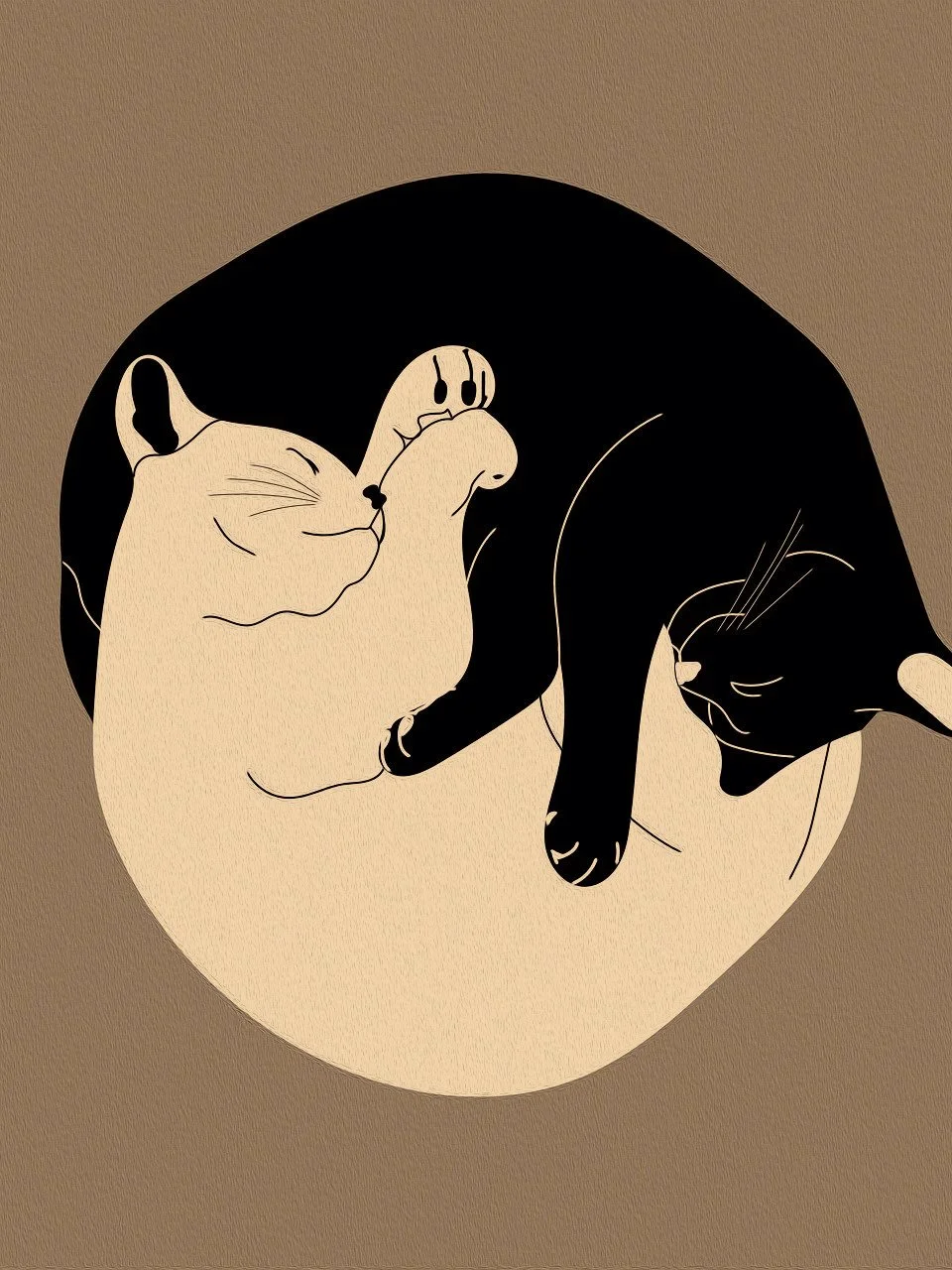
This is a great question, and one that I often puzzle over. There are so many easy errors to make in my opinion that other people have often fallen into by becoming too dogmatic in their approach to yin and yang. Hopefully I can get you to see the complexities that are at work with this seemingly simple pair of words, and why we need to put our thinking caps on whenever we come across them.
What I have come to understand is that when we talk about Yin and Yang it must always be in context with one another. They are not fixed points of reference but are two opposing forces which must be understood with the bigger picture in mind. Yin is in opposition to Yang. They are ‘relative opposites’. Always standing in relation to each other but also complimenting each other in a dynamic ever changing way.
Yin and Yang represent a relative balance of opposites. This is the key to understanding them, but perspective is also the key.

Generally we will talk of Yin as being Earthly, downward, cooling, feminine, slowing or static and Yang as respectively Heavenly, upwards, warming, masculine, fast or being movement itself. But these examples only show half of what is needed to give life to Yin and Yang. To fully be understood they need a frame of reference, some perspective. They need to be projected onto something in order to give them meaning.
Traditionally the example used is ‘Yang is of the heavens, Yin of the Earth and Man is standing in between them’. Thus we find the interplay of Yin and Yang, the ascending yang energies and the descending Yin energies interacting, striking through each other: creating Man, who stands in the eye of the cyclone. In a number of Chinese traditions it is understood that when we die, the Yang part of man returns to the heavens and the Yin parts return to the earth.
But to understand how perspective is important lets look more deeply at how Man stands in relation to heaven and earth. If Yang represents things which exist physically in the upper or superior position, then Man is Yang compared to the very ground he stands on. But if you were to compare the same Man to the blue sky above, he now sits in the Yin position. Seen one way Man is Yang, seen from a different perspective he is Yin. Man is both Yin and Yang, or to put it another way, he is neither Yin nor Yang.

Yin and Yang are utilised in many differing situations, not only to do with the celestial creation of life, but are also used to understand the very transformations our body undergoes. Life is in constant evolution, always changing. Our perspective in life is constantly changing and evolving. At first we are infants, to children, teens, young adults through to our old age. At any point in our lives we cannot possibly imagine what life will be like in another stage, at least not to any degree of detail. So sometimes we might be referencing Yin and Yang in terms of cycles of the day, or a breakdown of the various internal organs, ones that are Yin in nature and others yang as well as understanding those same organs from most internal to the most external physically or energetically or even by their associated element.
Classical acupuncture uses Yin and Yang as its foundation. But we also use other manifestations of it as well like hot and cold, internal and external, deficiency and excess. All of these examples are Yin and Yang but are given different names, and like Yin and Yang they mean nothing unless they are given context. In this case the context of a living human. Hot and cold might be opposites but they are meaningless unless they are used with some frame of reference.
Hopefully this has helped you understand Yin and Yang and the complexities inherent within its simplicity.